
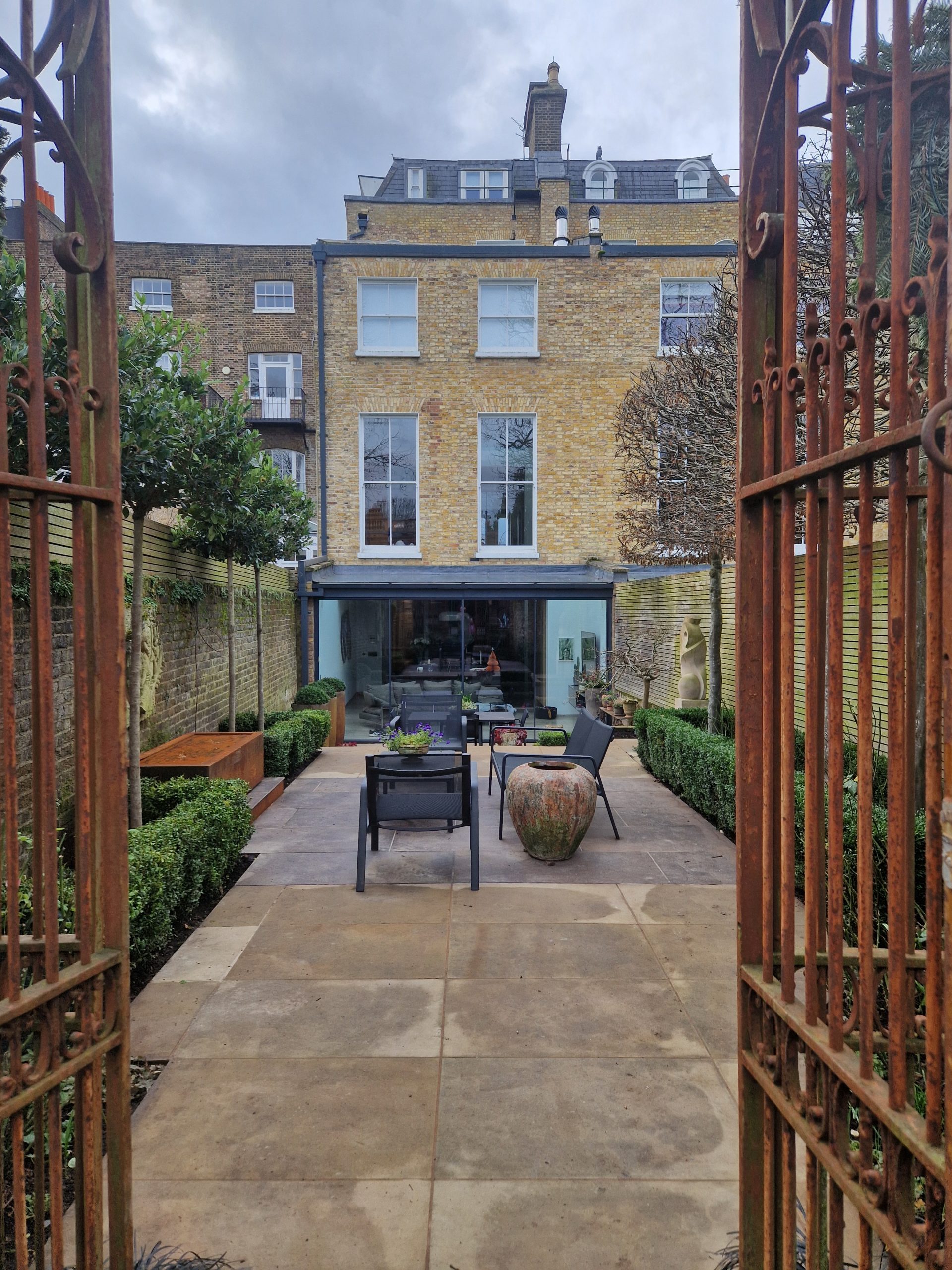
A great family garden should never feel frozen in time. Just as your children grow, your needs change too. What works for toddlers at a young age may be very different from what teenagers, parents and friends want from the same outdoor space a few years later.
That’s why designing a garden that grows with your family is all about flexibility. With careful planning, clever zoning and the right combination of plants, hard landscaping, seating and play spaces, it’s possible to create a garden that works for the whole family, both now and in the future.
At Taylored Gardens, we believe successful family garden design should give everyone a reason to spend time outside. From a safe play area and space for ball games to comfortable seating, outdoor eating areas and places for adults to relax, every part of the garden can have a purpose.
Planning a Family Friendly Garden
When designing family gardens, one of the biggest considerations is how the space will evolve as children move through different ages.
During the early years, a child-friendly garden might include a lawn, sand or mud play, den building, plastic toys, climbing frames and other play equipment. Having these features close to the house and main patio can make it easier for parents to keep an eye on younger children while still enjoying the garden themselves.
As the kids get older, their needs change. The space occupied by play structures or equipment can be designed so that it can eventually become additional seating areas, planting beds, a larger lawn or an entertaining space.
It is worth thinking about this flexibility from an early age. Rather than allowing a climbing frame or playhouse to dictate the entire garden design, we can position it within one of several distinct areas. Later, that same space can be transformed without having to redesign the entire garden.
Choosing Plants for a Family Garden
The best garden plants for a busy family space need to combine beauty with practicality. A low maintenance planting scheme is often a sensible choice, particularly when family life leaves little time for constant gardening.
Hardy shrubs, ornamental grasses and resilient perennials can provide structure, colour and interest throughout the year round. Choosing varieties that can recover quickly from the occasional football, toy or pair of muddy boots can also make family life considerably less stressful!
A low hedge can be a great way to separate a children’s play area from a more formal section without creating a visual barrier. Raised beds are another useful addition, helping to define different areas while providing opportunities for children to get involved with gardening.
Growing easy plants such as sunflowers, herbs, strawberries or vegetables can encourage creativity and give children the chance to explore nature. A trip to the garden centre to choose plants together can even become part of the experience.
Planting for wildlife adds another dimension. Watching bees, butterflies and birds can help younger children develop an interest in the natural world while creating a garden that feels alive throughout the seasons.
Structures That Change With Your Family
Good structures can completely transform how a family friendly garden works.
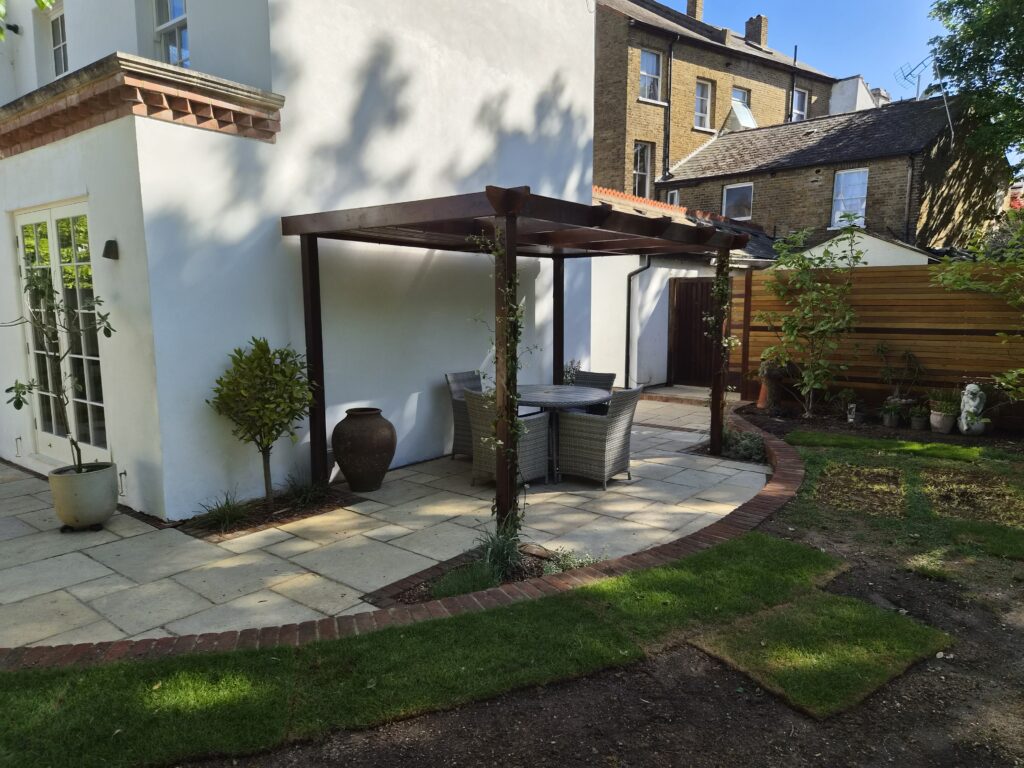
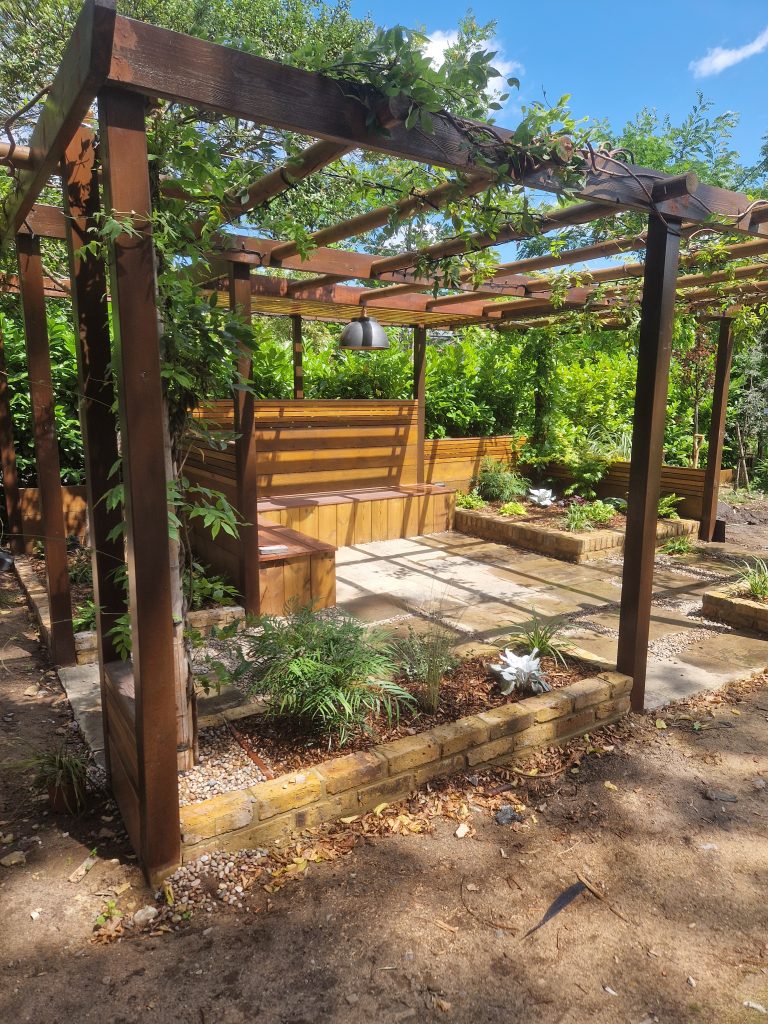
Pergolas can provide shade from the sun, while patios and terraces create practical spaces for outdoor dining and entertaining. Add outdoor cushions and comfortable seating, and these areas can become welcoming places for the family to gather from spring through late summer and beyond.
For younger children, climbing frames, playhouses and other play equipment can encourage active outdoor fun. The key is making sure there is enough space around them for safe play while considering what that area could become in the future.
A well-positioned shed is useful for storing bikes, toys and garden tools, helping keep the main garden uncluttered. As children grow, former play areas could become entertaining spaces, extra planting beds or perhaps an area with one of the increasingly popular fire pits.
This adaptable approach gives a garden a real sense of longevity.
Water Features, Ponds and Safety
A water feature or pond can be a wonderful addition to a family garden, bringing movement, sound and wildlife into the space. However, safety must always be a priority, particularly with toddlers and younger children.
If water is part of your ideas, tell us how you would like it to work within your garden. We can consider its position, design and relationship with play and seating areas as part of the wider planning process.
Every family is different, so there isn’t a single solution to creating a child-friendly garden. The challenge is balancing safety and practicality with a garden that still feels stylish and enjoyable for adults.
Caring for Your Family Garden
A garden designed for busy family life shouldn’t demand every spare weekend to keep it looking good.
Selecting robust, low-maintenance plants is a great starting point. Regular watering during dry periods, particularly for new planting, along with seasonal pruning, feeding and mulching can help keep plants healthy and looking their best.
Encouraging children to help can also be part of the fun. Simple jobs such as watering plants, planting seeds or collecting leaves can introduce gardening from an early age.
Keep garden tools safely stored when they aren’t being used, and regularly check children’s play equipment, climbing frames and other structures as part of routine garden maintenance.
With sensible plant choices and thoughtful design, your garden should be somewhere you enjoy rather than another job on the list.
Creating Distinct Areas for Everyone
One of the most effective approaches to family garden design is to create distinct areas without making the garden feel divided.
For example, the main patio could provide a comfortable area for outdoor eating and entertaining friends, while a nearby lawn offers room for ball games. A separate corner could be used for den building, imaginative play or a climbing frame.
Planting, raised beds, changes in paving and low hedge boundaries can subtly define these spaces.
As the children grow, those boundaries can remain while the purpose of each area changes. A play zone for toddlerscould eventually become a relaxed seating area for teenagers, before perhaps becoming an additional entertaining area for adults.
That’s the beauty of designing with the future in mind.
Articulating Your Ideas to Taylored Gardens
You don’t need to arrive with a finished garden design. In fact, part of our job is helping you turn your thoughts, requirements and inspiration into a practical design that works for your family.
Start by thinking about how you currently use your garden and what you would like to change. Do the kids need more room to play? Would you like somewhere to sit in the sun? Do you regularly have friends over for eating and entertaining? Are you tired of toys taking over the patio? Would you like more planting, wildlife or simply a calmer place to relax?
It’s also helpful to tell us how you imagine family life changing over the next five or ten years. When we’re designing family gardens, understanding these future needs allows us to make smarter decisions today.
Share photographs, inspiration and any ideas you’ve collected, but don’t worry if you don’t know exactly what you want. We can help bring everything together.
A Garden for Every Age
The most successful family gardens aren’t simply designed for today. They’re created to adapt.
With careful planning, the right plants, flexible play areas, practical storage, attractive hard landscaping and comfortable spaces for seating and entertaining, your garden can continue working beautifully as your family changes.
From the excitement of play equipment and den building during the early years to relaxed evenings with teenagers, family and friends, Taylored Gardens can help you create an outdoor space that everyone can enjoy.
Because ultimately, a great garden isn’t just about how it looks. It’s about giving the whole family a place to play, explore, relax, have fun and spend more time together — whatever their age.